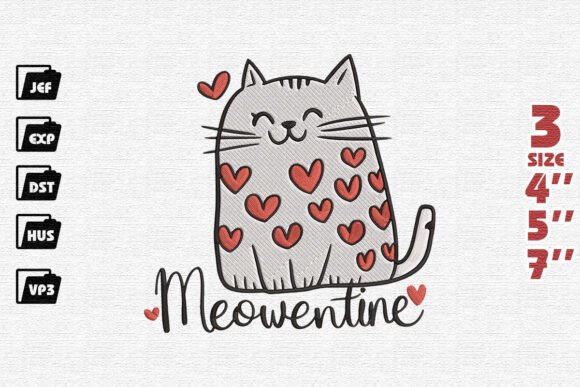
Feline Valentine Embroidery
First Impression: Sweet, Compact, and Instantly Recognizable
When I opened the Feline Valentine Embroidery file, what struck me first wasn’t just the charm—it was the clarity of intent. This isn’t a cluttered holiday motif or an overdesigned statement piece. It’s a focused, cohesive machine embroidery design built around one idea: affectionate playfulness. The cat sits centered, relaxed but expressive, with soft curves and gentle contours—not overly stylized, not cartoonish, but warmly approachable. Hearts orbit naturally, not rigidly spaced, and “Meowentine” curls with light confidence beneath. As a designer who’s stitched hundreds of seasonal files, I immediately saw its sweet spot: small-to-medium hoop sizes, mid-weight fabrics, and products where warmth matters more than wow-factor.
A Real-World Test: Stitching It on a Linen Tea Towel
Last week, I used Feline Valentine Embroidery for a batch of handmade kitchen towels—linen-cotton blend, medium weave, no stretch. I chose a 4×4 hoop and a lightweight cutaway stabilizer. The result? Clean satin stitch on the cat’s outline, smooth fill stitch in the hearts, and legible (but not stiff) lettering. No puckering. No thread breaks. Customers loved how it looked in person—not just in mockups. That’s the quiet strength of this design: it translates well from screen to stitch without demanding perfection from the operator. It doesn’t hide flaws, but it doesn’t punish reasonable technique either.
Where It Shines—and Where It Needs Thought
Feline Valentine Embroidery works beautifully on:
- Custom apparel: Sweatshirts, crewneck tees, and denim jackets—especially when placed left-chest or centered on the back.
- Embroidered patch: Great for iron-on or sew-on versions; the compact layout holds up well after cutting and sealing edges.
- Baby embroidery: On onesies, burp cloths, or nursery pillows—its gentle scale and friendly expression suit delicate items.
- Tote bag design: Stitches cleanly on canvas or cotton duck, and reads clearly even at arm’s length.
- Holiday embroidery for small shops: Perfect for limited-edition Valentine’s Day bundles, craft fair merch, or Etsy listings with cohesive branding.
But be thoughtful about placement and fabric:
- Avoid very thin or highly textured fabrics without proper stabilizer—those tiny heart details can blur on loosely woven gauze or slubbed linen.
- On dark fabric, test thread colors carefully: light pinks or creams may lack contrast unless you switch to ivory or pale gold.
- Don’t force it onto curved surfaces like cap fronts without adjusting underlay or reducing density—it’s not built for aggressive contouring.
- The “Meowentine” lettering is charming, but not ideal for sub-2-inch hoops—smaller versions risk legibility loss in fill stitch.
What It Adds to Your Finished Product
Feline Valentine Embroidery elevates handmade product perception—not by complexity, but by intentionality. When customers see that little cat nestled among hearts, they don’t just register “Valentine’s.” They register care, personality, and a wink of humor. That builds trust faster than generic script fonts or stock roses. For Etsy sellers and small shop owners, that emotional resonance directly supports pricing confidence. A $32 embroidered apron feels worth it when the design feels *made for the moment*, not pasted on. And for craft business owners building seasonal collections, this design slots neatly into a broader aesthetic—think muted palettes, natural fibers, and gentle branding—without needing heavy rework.
Designer Notes You’ll Actually Use
Before stitching your first Feline Valentine Embroidery project, do these five things:
- Test on scrap fabric—same type and weight as your final product. Watch how the hearts fill and how the cat’s face reads at your intended size.
- Check thread color contrast in natural light. What looks balanced on screen may fade on oat-colored linen or disappear on charcoal fleece.
- Review stitch density—if your machine struggles with dense fills, consider slightly reducing density in the hearts (not the outline) for smoother running.
- Confirm hoop size compatibility. If you’re using a 3×3 hoop, verify whether the design fits comfortably—or if scaling down affects readability.
- Inspect small details in your embroidery software: look for stray jump stitches near the cat’s ear or tight corners in the lettering that might snag during trimming.
Also: run a black-and-white printable mockup to assess silhouette strength, compare light/dark background options before committing to thread, and always use appropriate stabilizer—especially for knit or stretchy custom apparel. And if you plan to sell finished items or list the digital embroidery file itself, confirm licensing terms. This isn’t just etiquette—it’s protection for your craft business.
Final Thought: A Design That Fits, Not Forces
Feline Valentine Embroidery doesn’t try to be everything. It’s not a showstopper for large-format wall hangings, nor is it built for micro-embroidery on cufflinks. But within its thoughtful boundaries—soft scale, balanced detail, warm theme—it delivers consistent, professional results. Whether you’re stitching personalized gifts for friends, building a boutique’s holiday line, or adding charm to your Etsy shop’s bestsellers, this embroidery file earns its place in your design assets. It’s reliable, it’s kind, and it reminds us why we embroider in the first place: to make something that makes people smile.