Happy Pawlidays Embroidery
A Practical Review for Small Business Merch & Branded Patches
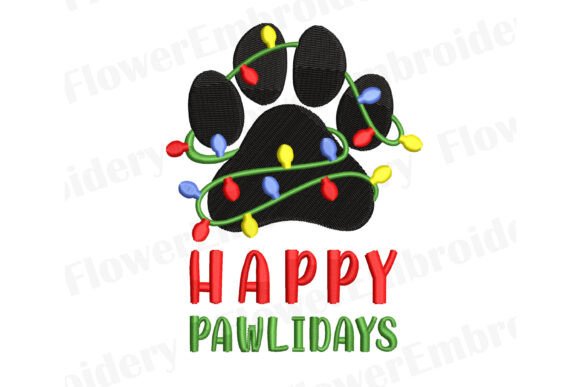
As an embroidery designer who’s developed and tested hundreds of machine embroidery designs for small business clients—from neighborhood bakeries to indie pet brands—I approached Happy Pawlidays Embroidery with a dual lens: creative appeal and commercial viability. The name alone signals warmth, playfulness, and seasonal relevance—ideal for businesses that want holiday charm without cliché overload. Based on the description—Christmas Dog Machine Embroidery Design, intended for t-shirts and pajama sets—it reads as friendly, approachable, and intentionally lighthearted—not overly ornate or formal. That’s a strategic strength for small business merch where authenticity and relatability drive customer connection.
Real-World Performance Across Business Applications
Happy Pawlidays Embroidery shines brightest when used intentionally—not as filler, but as a signature accent. For a local café offering holiday mugs and knit caps, this design works beautifully as a chest patch on staff aprons or a subtle sleeve detail on barista shirts. Its dog motif adds personality without alienating non-pet customers, while “Pawlidays” reinforces brand voice with clever wordplay—a subtle but memorable differentiator in crowded markets.
For handmade shops and Etsy sellers, Happy Pawlidays Embroidery functions well as a sew-on embroidered patch on tote bags, gift tags, or packaging accents. When applied to cotton twill tote bags or canvas aprons, it communicates craftsmanship and seasonal intentionality. On custom apparel like unisex tees or lounge sets, it balances whimsy and wearability—especially when paired with minimalist layouts (e.g., left-chest placement, 3–4 inch width). As cap embroidery? It holds up best on structured front panels—not curved back straps—where clarity and stitch integrity remain high.
Boutiques and creative studios can leverage Happy Pawlidays Embroidery across multiple touchpoints: stitched onto product labels for handmade soaps or candles, embroidered directly onto holiday-themed gift wrap rolls, or even scaled down for boutique merchandise tags. Its visual rhythm—likely built around balanced lettering and a central canine figure—supports consistency across formats, reinforcing brand identity without demanding full logo redesign.
Where to Use It Thoughtfully
Like any machine embroidery design, Happy Pawlidays Embroidery requires context-aware application. Avoid using it at under 2 inches tall on curved surfaces (e.g., baseball cap fronts with deep crowns) unless you’ve verified its legibility at that scale. Tiny lettering in “Pawlidays” may blur or fill in on dense fabrics like fleece or textured corduroy—especially if stitch density is high. Always test on your target fabric first: dark uniforms need strong thread color contrast (think white or metallic gold over navy), and frequent-wash items (like staff aprons) benefit from tighter satin-stitch outlines and reduced fill density to prevent fraying.
Also consider placement logic. A full-size version may overwhelm a pocket or wristband, but a simplified outline-only variant (if included in the embroidery file bundle) could work elegantly on seam tabs or woven labels. If the digital embroidery file lacks alternate versions, plan ahead—some digitizers offer companion files; others don’t. Don’t assume scalability without verification.
How It Shapes Brand Perception
When integrated intentionally, Happy Pawlidays Embroidery elevates perceived value—not just through festive flair, but through thoughtful execution. Customers notice when embroidery feels considered, not slapped on. A well-placed, cleanly stitched Happy Pawlidays Embroidery patch on a bakery’s holiday apron signals pride in craft and attention to detail—qualities that build trust. For pet-focused brands, it strengthens niche alignment; for florists or bookshops, it adds joyful contrast without diluting core identity.
Visually, it supports handmade presentation by avoiding over-polished vector sterility. Its implied warmth invites engagement—people smile at dogs, puns, and holidays all at once. That emotional resonance translates directly to buyer engagement, especially during gifting seasons. And because it’s designed for Christmas-themed t-shirts and pajama sets, it fits naturally into existing product ecosystems rather than forcing a thematic mismatch.
Essential Designer Notes Before Production
Before committing to bulk runs or client projects, run these checks:
- Test in black and white first—to assess contrast, spacing, and negative space balance without color distraction.
- Verify small-patch viability—resize to your smallest intended use (e.g., 1.75”) and check if “Pawlidays” remains readable and the dog retains definition.
- Review thread color recommendations—or select high-contrast combos yourself (e.g., kelly green thread on cream linen, silver on charcoal).
- Inspect letter spacing and kerning—tight tracking can cause thread nesting; open spacing improves breathability and wash durability.
- Confirm hoop size compatibility—if your standard hoops are 4x4”, ensure the design fits without excessive re-hooping.
- Test on real fabric + stabilizer combo—especially for textured or stretchy materials common in small business merch.
- Create a printable mockup for client approval—showing placement, scale, and thread colors builds confidence before stitching begins.
- Compare alongside other design assets—does it complement your current logo, typography, and color palette—or compete with it?
- Confirm commercial licensing—since this is for small business merch, branded patches, and resale items, verify the embroidery file permits commercial embroidery use. If unclear, contact the seller before production.
Remember: Happy Pawlidays Embroidery isn’t just a festive graphic—it’s a functional tool for storytelling, recognition, and differentiation. Used with intention, it helps small businesses stand out in a sea of generic holiday prints. Whether stitched on a coffee shop’s apron or a pet boutique’s tote bag, it carries warmth, wit, and wearability—all essential ingredients for memorable, market-ready merchandise.