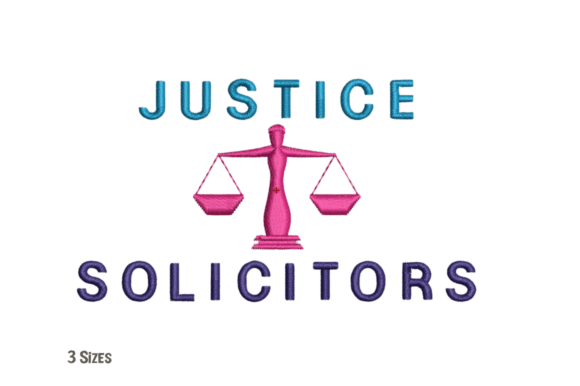
Justice Solicitors Machin Embroidery
A Craft Fair Designer’s First Look: Bold, Sophisticated, and Surprisingly Versatile
As someone who’s stitched hundreds of designs for weekend craft fairs, Etsy launches, and boutique wholesale lines, my first impression of Justice Solicitors Machin Embroidery is immediate: it reads as premium—not playful, not rustic, not minimalist—but elegant with quiet confidence. The pairing of striking pink scales and bold teal text gives it a modern professional edge, while the “scales of justice” motif grounds it in timeless symbolism. It doesn’t shout. It commands attention through clarity and contrast. That’s gold at a crowded handmade market where buyers scan booths in under three seconds.
Where This Design Shines on Craft Fair Products
This isn’t a one-size-fits-all embroidery file—it thrives where intention meets utility. Here’s how it performs across your most common craft fair inventory:
- Tote bag design: Perfect as a centered chest or lower-front focal point. The pink/teal combo pops against natural canvas, charcoal linen, or oatmeal cotton—no fading, no visual competition.
- Apron embroidery: Ideal above the pocket or along the waistband. Teal text stays legible even with light fabric movement; pink scales add warmth without overwhelming the garment’s function.
- Tea towel embroidery: Works beautifully in the lower corner or centered near the hem. Just be mindful: on textured terry or looped cotton, stitch density may require extra stabilizer to prevent shadowing or skipped stitches.
- Embroidered patch: A standout ready-to-iron or sew-on option. At 3–4 inches wide, the design holds proportion and readability—ideal for law students, paralegals, or advocacy groups seeking subtle solidarity.
- Caps and pouches: Use only the scaled-down version (if provided) or re-digitize carefully—the original lettering may lose impact on curved surfaces or small formats. Test on scrap first.
- Pillow covers & market bags: Excellent as a medium-scale accent. The symmetry and balance of the scales translate well to square or rectangular fields, reinforcing handmade quality without looking busy.
What Makes It Sell—And What Requires Caution
Justice Solicitors Machin Embroidery sells because it bridges identity and aesthetics: it signals purpose (justice, integrity, remembrance), yet feels fresh and wearable—not stiff or institutional. Buyers respond to that duality. At craft fairs, I’ve watched customers pause, tilt their heads, then reach for the embroidered tote before asking, “What’s the story behind this?” That’s engagement you can’t script.
But practicality matters just as much. This design demands thoughtful execution:
- Small lettering risk: “Solicitors” in bold teal must remain crisp. If the file includes fine serifs or tight kerning, test on dark fabric—thread bleed or low contrast could mute legibility.
- Dense stitch areas: The scales likely contain fill-stitch zones. On thick fabrics like denim aprons or quilted pouches, excess density may cause puckering. Always pair with cutaway or tear-away stabilizer suited to the base fabric.
- Curved surfaces & texture: Avoid placing full-scale versions directly over cap crowns or heavily textured tea towels unless you’ve verified thread float control and needle penetration.
- Photography & online appeal: This design photographs exceptionally well—clean lines, high-contrast colors, strong iconography. It translates powerfully in printable mockups for Etsy listings and social ads. Just ensure your background complements (not competes with) the pink and teal.
Production Notes Every Embroidery Designer Should Run Through
Before cutting into your best fabric or loading 50 caps into hoops, treat Justice Solicitors Machin Embroidery like any commercial embroidery asset you’d sell yourself:
- Test the machine embroidery design on scrap fabric matching your intended product—same weight, weave, and stretch.
- Verify thread colors: confirm the pink and teal you’re using match the intended mood (e.g., dusty rose vs. hot pink changes the whole vibe).
- Review spacing between scales and text—tight margins may collapse at smaller sizes or on knit fabrics.
- Confirm hoop size compatibility with your embroidery machine and product type (e.g., cap frames vs. flat hoops).
- Inspect stitch density in the fill areas—adjust if needed for fabric breathability or drape.
- Use the right stabilizer: lightweight for tea towels, medium-cutaway for structured totes, cap-specific for headwear.
- Create at least one real mockup—not just digital. Hold it in natural light. Walk away and look back. Does it hold its own?
- Compare fabric colors side-by-side: the same teal reads differently on ivory vs. navy. Adjust expectations accordingly.
- Confirm commercial licensing status before selling finished products—this is non-negotiable for Etsy sellers and small shop product lines.
Final Thought: Why This Belongs in Your Booth—and Your Catalog
Justice Solicitors Machin Embroidery stands out in a sea of florals, quotes, and cottagecore motifs because it carries weight—literally and symbolically. It elevates a simple tote into a statement piece. It transforms an apron from kitchen tool to conversation starter. It adds quiet dignity to a remembrance-themed collection without leaning into somber cliché. For embroidery business owners building a signature style, this design strengthens brand consistency: clean, intentional, human-centered.
Yes, it asks for care in production—but that care shows up in the finished product. And at craft fairs, handmade quality isn’t just felt—it’s seen, remembered, and chosen again. Whether you’re stitching for a local legal aid fundraiser or launching a new line of professional handmade gifts, Justice Solicitors Machin Embroidery earns its place front-and-center.